Advancing Knowledge and Driving Change
What Epistemologies and Methodologies for Engaged Research in the SE Field in Times of Multidimensional Crises
Rationale
In recent decades, the rise of the SE field[1] has brought to the forefront new ways of organising economic activities around values of cooperation, democracy, sustainability, and inclusion. These initiatives—whether cooperatives, community enterprises, social start-ups, or hybrid organisations—seek not only to address unmet social needs but also to reimagine the very purpose and functioning of the economy. For researchers, this growing field represents a fertile terrain for exploring alternative forms of value creation and governance, as well as the tensions and complementarities between social mission and economic viability. Yet it also calls for renewed reflection on the role of research(ers) in social change and on the nature of the relationship between researchers and field actors in that regard.
When studying organisations and movements that aim to transform society, scholars often find themselves navigating complex boundaries between observation, intervention, and engagement. Many researchers are directly involved with the actors and communities they study—as volunteers, activists, or co-creators of knowledge. Is this position a source of insight or does it inevitably lead to biased research? This question raises important issues about power dynamics, positionality, legitimacy, knowledge holders and the ethics of co-production. How can one contribute to collective empowerment while maintaining analytical clarity and critical distance? How can researchers ensure that their engagement strengthens rather than instrumentalises the communities with which they work?
Engaged, participatory, and activist forms of research are increasingly recognised as meaningful approaches to studying social innovation and solidarity-based economies. Action research, participatory ethnography, and collaborative inquiry, among others, have demonstrated their potential to generate socially relevant knowledge and to support transformative practices. However, such approaches also challenge conventional academic norms regarding objectivity, neutrality, and evaluation. They invite us to reconsider what counts as valid knowledge, who is entitled to produce it, and for whom research is ultimately conducted. In doing so, engaged research highlights the political dimensions of knowledge production and the responsibility of scholars to reflect on the impact of their work beyond academia. From this perspective, this training school will explore various epistemological and methodological approaches that could support and strengthen engaged research. We will, among other things, look at the following questions: How do North–South relations affect research, and what forms of decolonial research are possible? How can intersectionality be taken into account in research, and what place is there for feminist research? How can we go beyond research extractivism? Ultimately, it is epistemic justice that seems to be at stake.
The 10th EMES International Training School takes these tensions and opportunities as its starting point. It aims to provide a space for collective exploration and critical discussion about what it means to “engage” as a researcher in the SE field. By bringing together doctoral candidates and early-career researchers from different disciplinary and geographical contexts, the 10th EMES International Training School seeks to foster dialogue about methodological innovation, ethical reflexivity, and the multiple ways in which research can contribute—directly or indirectly—to social transformation.
[1] The “SE field” refers to the wide domain of social enterprise, social economy, solidarity economy, social entrepreneurship and social innovation.
About the EMES Training Schools
The 10th EMES International Training School (#10EMEStrainingschool) aims to investigate and discuss epistemologies and methodologies for engaged research in the SE Field, which is especially important in a multiple crises context. There have been nine successful editions of the EMES Training Schools so far held at the University of Corsica (France) in 2008; Roskilde University (Denmark) in 2010, the University of Trento (Italy) in 2012; West University of Timișoara (Romania) in 2014; Glasgow Caledonian University in Glasgow (UK) in 2016; Aix-Marseille University in Marseille (France) in 2018; in a blended learning format led by University College Cork (Ireland) online in 2020 and face-to-face in Teruel in 2021; Seville (Spain) in 2022; and Trento (Italy) in 2024. The tenth edition will be held at the Louvain-la-Neuve by UCLouvain and ULiège (Belgium) in June-July 2026.
Some 350 PhD candidates and early career researchers (ERC) from over 45 countries have so far participated in these unique learning events. PhDs and ERC constitute a central part
of EMES as shown by the special membership category for PhD students, the seat reserved for PhD students in the EMES Board of Directors, and various dedicated concrete activities.
PhD candidates and ERC coming from different disciplinary backgrounds (such as sociology, management, economics, political sciences, and so on) whose research projects are connected to this field are welcome to apply for this training school. Individual research projects can target different forms of collective action, including social movements, informal grassroots initiatives, and SSE organisations, as well as the context wherein collective initiatives and organisations are embedded (social, political, economic or cultural backgrounds).
EMES, CIRTES-UCLouvain and CES at HEC Liège-ULiège jointly organize the 10th EMES Training School aimed at researchers at early career levels, PhDs or completing Masters programs who are attracted to conduct research in the wide fields of social entrepreneurship and social enterprise, social economy and solidarity economy (the SE field). With this training school, EMES, CIRTES-UCLouvain and CES at HEC Liège-ULiège aim to:
- Strengthen the training of PhD students by means of methodological and theoretical lectures, debates, and professional workshops;
- Emphasise the research design, methodology and epistemological grounds involved in any research project, specifically in a doctoral and early-career path;
- For PhD candidates, provide personalised feedback and support via well-supported small group discussion sessions on participants’ research projects, their research questions, approaches and theoretical understandings; more precisely, in addition to various opportunities of informal discussion, at least a full hour will be devoted to every student’s research project within group sessions (for presentation by the student, feed-back by professors and their peers, discussion and synthesis of recommendations);
- For ECR, provide a trust-based environment to share future career plans and professional development. Sessions for ECRs will be self-organised with the support of the EMES PhD and ECR networks as a way to cater to their specific needs.
- Provide space for social and intellectual discussion so that doctoral students and ECR will have ample opportunity to establish and expand their own peer networks and benefit from contacts and feedback from established scholars;
- Encourage the engagement of a broad and diverse range of participants, including key actors (e.g., academics, policy makers, practitioners) at the local, national and EU levels. Exchanges with researchers from different countries, continents, cultures and academic disciplines will support stimulating reflections on research approaches, while discussions with practitioners in the field will expose participants to a first-hand experience that expands their capacity to address real life problems in a context of increased complexity.
Important dates
- Launch of the call for applications: 18th December 2025
- Application submission deadline: 20th February 2026
- Results of the selection process: 20th March 2026
- Opening of registration platform: 25th March 2026
- Registration deadline: 29th May 2026
- Arrival of participants: 29th June 2026
To apply, please download the application form on the right, complete it, and send it to the indicated email address no later than 20 February. Applications to the 10th EMES International Training School will be assessed based on the information provided in this form.
Venue and Accommodation
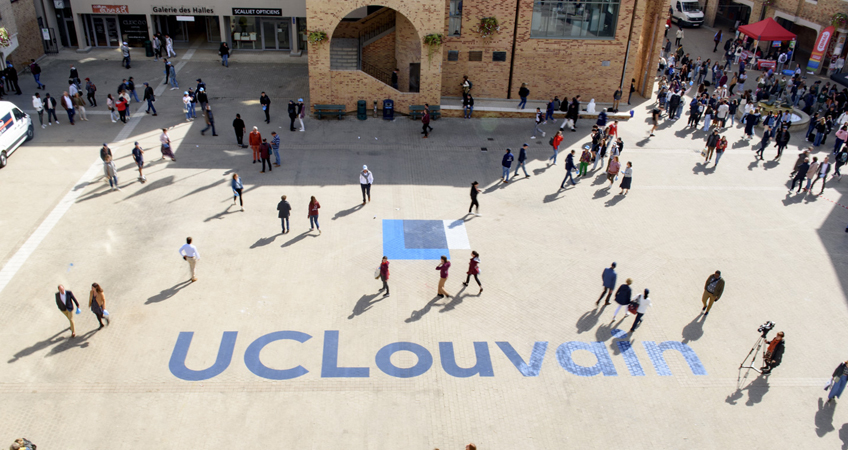
All the academic activities of the 10th International Training School will take place at the Catholic University of Louvain (https://www.uclouvain.be), Montesquieu Square, 3 at Louvain-la-Neuve (1348, Belgium).
Participants will be staying at the Gîte Mosaïk (https://www.gite-mozaik.be), Rue de la Gare 2, 1348 Ottignies-Louvain-la-Neuve.
More information on how to reach the Training School venue will soon be published.
Visit www.emes.net for additional information.